Tuesday, September 23, 2008
Craig Brewer, Hustle & Flow (2005), Andrew Bujalski, Funny Ha Ha (2002)
Saturday, September 13, 2008
Rainer Werner Fassbinder, Ali Fear Eat the Soul (1974)

As a stand-alone story, Ali is fascinating but the background of Fassbinder and the lead actors are also larger than life. Fassbinder and El Hedi ben Salem, who plays Ali, had a tumultous personal and professional relationship, and both died unexpectedly (Fassbinder of a drug overdose in the early 80s and El Hedi ben Salem of suicide in jail after having been convicted of murder). Brigitte Mira, who plays the female lead, actually lived to the ripe old age of 95 years old and was married 5 times!
In today's world of film, these eccentric character-driven indy films made on tiny budgets are ubiquitous, proving that Fassbinder's mark on the cinema is still alive and well today. GreenCine Daily reports that a film about Fassbinder's life is currently in the works, so perhaps we'll see a rise in the popularity of his films as well.
Thursday, August 28, 2008
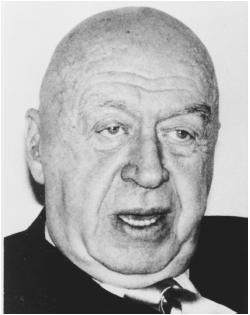
Otto Preminger- Laura (1944), Where the Sidewalk Ends (1950)

Every great film noir has three basic elements: rain, hard liquor and chain-smoking. Laura has its share of all three as well as an extremely detailed and often-times inconceivable plot which is scattered with moments of campiness. The film has some great one-liners, such as Clifton Webb's character, Waldo Lydecker, saying "I hate pens" and Detective McPherson telling the maid: "Well spit if it makes you feel better". Despite Preminger's reputation for being obstinant and rumors of tension between the actors on-set, there is a sense of joy with which Preminger's casts take on their roles. Many of his actors and actresses received their highest critical acclaim while under his direction.
Saturday, August 2, 2008
Terrence Malick, The Thin Red Line (1998); New World (2005)
Have you seen Days of Heaven yet? In comparison with Terrence Malick who waited for 20 years after Days to make The Thin Red Line, my delay of slightly over a month between blog posts pales by comparison. In order to make reparations for my delay, I give you a two for one today: a review of Malick's latest two films.
Both The Thin Red Line and The New World are a continuation of Malick's dialogue about humankind's place in the natural world. If you could go camping with any director, it would have to be Malick. He simply sees things in nature that your average person does not; while all his films discuss human-centric stories, the subtext always tackles the greater world surrounding the human characters.
Both Thin Red Line and New World begin with visual scenes of nature including thick, lush forests and other-worldly underwater environs. This idyllic natural world in both films is interrupted by the "human world" which has been tainted by war or famine or disease. In Thin Red Line, this transition is illustrated with the emergence of World War II ships rumbling over the horizon. In New World, man's harmonious convergence with nature ends with the appearance of the English settlers' boats in Jamestown.
Both these arthouse films have long run times (over 2 hours) which bombard you with ideas frequently conveyed through a haunting, poetic voiceover spoken by the main character. James Caviezel's soft-spoken philosophic voice-over in Thin Red Line was pitch perfect.
In the end, neither film achieved great financial success, probably because someone searching for a traditional war movie or a Cowboys-and-Indians movie would probably go elsewhere, and with good reason. Thin Red Line was released in the same year as Saving Private Ryan, and as such was overhadowed by the hype surrounding that film and its more conventional storytelling. In the case of New World, casting Colin Farrell in a serious role, or really in any role that's not about his hair is perhaps asking a bit too much.
In any case, the good news is that Malick will not wait another decade for his new film; Tree of Life is in post-production and due out next year. Let's hope that Brad Pitt, who stars in the lead role and who is not inexperienced when it comes to hair movies, takes the high road and elevates his acting to meet Malick's genius.
Friday, June 20, 2008
Terrence Malick, Days of Heaven (1978)
In thinking of a modern-day film to compare with Days, I was quite pleased at myself for recognizing the similarities with PT Anderson’s There Will Be Blood (2007). Of course, when I started scouring the Internet to find still photos which show the similarities in style, I stumbled upon several articles comparing the two films, including one from this blogger. Oh well, I prefer to think of this coincidence as a justification of Malcolm Gladwell’s recent article in the New Yorker , the thesis for which is that similar innovation often happens at relatively the same time in different places.
But I digress… I don’t know whether PT Anderson was influenced by Malick, but both Days and Blood share a slow-paced style of storytelling in which the plot unfolds through long shots of characters’ actions often without the use dialogue. Both films also frame the conflict between the characters in the larger context of the natural world around them. The "natural" disasters which occur in both Days and Blood are almost visually overwhelming and serve to symbolize and heighten the human tension between the characters. Both films are also filled with Biblical references; there is literally a lot of fire and brimstone imagery on the screen (Days photos are above, Blood photo is below).
Like Badlands, Days of Heaven also employs the voice-over of a young girl (13-year old Linda Manz). This serves to add an interesting child-like perspective to the events of the plot which will often differ from what the audience knows to be true. This mismatch of interpretations gives the film depth and helps to keep the audience engaged. In the end, its easy to understand why this film was exhausting to make. While the real reason may never be known for why Malick left film directing for 20 years after Days, one thing is certain: that audiences certainly missed Malick's unique style during those two decades.
Tuesday, June 17, 2008
Terrence Malick, Badlands (1973)
Malick is known for being a bit of recluse, but the attitude is refreshing. Instead of preening for attention, he instead appears to enjoy making beautiful films and letting them stand on their own merits. His low-key personality is also reflected in his directorial sytle- almost all of them feature voice-over narration spoken in a philosophical, conversational manner by the main character. Visually, the human drama is placed in the context of the surrounding natural world. The images of the natural world are often stunning and have the effect of framing very dramatic human conflicts as miniscule within the larger context (see picture below).
Badlands is elevated by the superb acting of the two main characters: a young Martin Sheen (pre-Apocalypse Now (1979)) and an even younger Sissy Spacek in one of her first films. From the opening scene, Malick sets the tone with a plodding musical score repeated throughout the film and presents the two characters as good-hearted and likable kids who are naive to the brutality of the world around them. As the plots develops and the characters succumb to violent actions, the viewer must deal with the brutal crimes of the protagonists and balance these emotions against the empathy we already have for them.
In terms of modern comparisons, Badlands is a more subtle character-driven film than Arthur Penn's Bonnie and Clyde (1967) and a less-over-the-top and gory film than Oliver Stone's Natural Born Killers (1994). Badlands has few flaws and its aged well over time; the acting is great, the directing is unrivaled and the cinematography is timeless. A must see for any film lover.