Monday, December 14, 2009

Arthur Penn, Night Moves (1975)


Night Moves is a big budget, mainstream film from 1975 with the requisite ingredients of its genre: a star director (Arthur Penn), a star male lead (Gene Hackman) and more than a few attractive female characters (Susan Clark, Jennifer Warren and a young Melanie Griffith). There are a few laugh-out-loud pages of dialogue which have not aged well over the past three decades. One example of high unintentional comedy involved a long discussion between Hackman and Jennifer Warren reminiscing about the erect nipples of youth.

However, for the most part what I realized watching Night Moves is just how dumbed down most mainstream films are today. The "mystery" uncovered by Gene Hackman's private eye (an homage to the airplane scene in North by Northwest) is interesting, but the real value in NM resides in its subtext. The film's title is revealed as a double entendre in a scene where Hackman describes to Warren about the knight moves in a chess match by two great masters. Hackman describes how the chess champion lost the match and regretted his whole life that he missed the opening in the match for checkmate in three simple moves of the knight. This dialogue is juxtaposed against the chess match of plot movements, as the mystery unfolds and Harry Moseby slowly determines who's lying and who's telling the truth. Admittedly, its completely unbelievable that Jennifer Warren's character (a drifter living in the Florida Keys) would understand the elegance of a series of chess moves from a match which occured a decade earlier, but it does, however, work as a neo-noir metaphor for the intricate plot of the film.

Finally, the other cool thing about this film is that the Harry Moesby character is essentially a pre-cursor for Hackman's Coach Norman Dale character from Hoosiers: at one point he shakes a booklet while yelling at James Woods character, he gives a couple of speeches which felt like you were transported to the Hickory High locker room. In the end, it not a film that will change your life, but it is certainly engaging throughout.

Sunday, May 31, 2009

Roman Polanski, Chinatown (1974)


Chinatown (1974), Roman Polanski's noir classic about the corrupt underbelly of Los Angeles, won all the awards of its day and is cited as the mold for crime thrillers for many years to come. Rotten Tomatoes does not have a negative review of the film and Spike Lee says its his favorite. But watching it from today's perspective, does it truly meet the high standard of these accolades?


For me the answer is: "yes, for the most part". First, its amazing how many recent films have ripped off many of the elements of this film. In fact, L.A. Confidential (1998) won more Oscars than Chinatown did and completely copied its "how L.A. once was" style, its noirish tone and its musical score (compare here and here). If film plagiarism was a crime, Confidential's director Curtis Hanson and screenwriter Brian Helgeland would still be in jail today. And surprisingly, Matt Damon was not the first person to utter the famous line "How 'bout them apples" in Good Will Hunting (1997); Jack Nicolson's character, J.J. Gittes, uttered the line a quarter century before him! Finally, Chinatown truly sets the standard for suspense- long slow pacing is interrupted abruptly by tense music followed usually by a burst of action and often violence.


But is it perfect? No. At times the pacing of the film is too slow for my tastes (L.A. Confidential suffered the same malady). Polanski needs the slow pacing to keep the audience guessing as Gittes slowly unravels a complex mystery. And this is really a small quibble, especially given the backdrop of today's rock em', sock 'em non-stop action overkill film industry. In the end, if you thought the revelation that Luke's father is Dark Vader, then you will enjoy the fabulous familial plot twist that Chinatown throws out near the end of the film.

Saturday, April 18, 2009

Ernst Lubitsch, Trouble in Paradise (1932)


There's something clearly ahead-of-its-time modern about Ernst Lubitsch's Trouble in Paradise. In watching old films from the 1920s, 30s and 40s, I find that dramas such as Renoir's The Rules of the Game (1939) and Lang's Metropolis (1929) tend to be much more watchable today than comedies from these decades. Perhaps there is something in the nature of humor and comedy that is era-centric. What is biting and witty to one generation becomes cliche and kitsch to the next generation.


Trouble is one of the exceptions to this rule. Filled with biting sarcasm and double entendres, Trouble plays like a Shakesperian comedy and keeps the viewer engaged and laughing throughout. The so-called "Lubitsch touch" as it pertains to this film is a directorial pacing which keeps the story moving at a fun and light pace as well as visual witticisms such as the opening of the film which shows the words "Trouble in" and shows an empty bed for two, followed seconds later by the word "Paradise" (check it out at the 40 second mark of this link).
This attention to detail and subtle directorial style causes Trouble to remain one of the great comedies even today.

Tuesday, September 23, 2008

Craig Brewer, Hustle & Flow (2005), Andrew Bujalski, Funny Ha Ha (2002)


At first glance, a comparison of Andrew Bujalski's Funny Ha Ha and Craig Brewer's Hustle and Flow is unfair. Funny is a low-budget film without major studio backing, whereas Hustle was backed by a major name (John Singleton) and was remarkable for the buzz it received as a symbol of how the Sundance Film Festival has sold out to the corporate gods. Interestingly, the NY Times slammed Hustle as "naive" and "rubbish", while fawning over the "beautiful" Funny.

In some respects, both films should be lauded: both 24-year old Bujalski and 34-year-old Brewer wrote scripts and directed these films which really capture the subgroup of society that they are attempting to portray. Similarly, both directors aspire to be a John... Bujalski wants to be John Cassavettes and Brewer wants to be John Singleton (check out min 33 of this interview). But what sets Brewer's Hustle several steps above Funny is the fact that he has written a script about a group to which he does not belong to: the predominantly black poor of Memphis.

Brewer has absorbed his rather sad history and personal traumas (the death of his father) and created an energetic film with the positive message of the benefits of doing whatever's necessary to follow your dream, as exemplified by this scene where the main characters cut their hit rap track. Bujalski, who comes from a wealthy New England suburb of priviledge has written a largely negative and angst-ridden film about twenty-somethings with no major life traumas who are struggling to find their path in the world. Which is not to say that Bujalski's depiction is inaccurate; its just that it generates no emotion when viewed next to Brewer's characters' more serious plights in life.

Both are worth watching though those who do not love independent films might struggle with the slow pace and low budget rough edges of Funny.

Saturday, September 13, 2008

Rainer Werner Fassbinder, Ali Fear Eat the Soul (1974)


Quirky film driven by the unlikely relationship between an elderly German cleaning lady and a Moroccan car mechanic, 25 years her junior, living in Munich. The film is fascinating for the way that it illustrates the tricky inter-relationship between diverse social groups including German bar waitresses, blue collar Arab immigrants, the aging German generation (Emmi's co-workers and neighbors) who came of age in the Hitler era of secrecy and deception as well as the younger generation of "hip" Germans living the urban life. This scene (Caution: contains spoilers) not only shows the great acting of the two lead characters but it also illustrates the tension between various German social groups.

The film is also quite interesting for the high unintentional comedy factor of the 1970s setting which at times feels like an Austin Powers spoof. The dress, painting and curtains in this shot (see picture on the right) say it all. Additionally, Ali is shown on several instances in his... umm full glory. In a sense though, this is a theme of both this film and some of Fassbinder's other works: when life and people are completely exposed, its messy, and the inherent tension between them is both enjoyable and cringeworthy. Even the German title of the film (Angst Essen Seeke Auf ) is actually written in broken German and seems to be meant to further illustrate this "messiness" of real life.

As a stand-alone story, Ali is fascinating but the background of Fassbinder and the lead actors are also larger than life. Fassbinder and El Hedi ben Salem, who plays Ali, had a tumultous personal and professional relationship, and both died unexpectedly (Fassbinder of a drug overdose in the early 80s and El Hedi ben Salem of suicide in jail after having been convicted of murder). Brigitte Mira, who plays the female lead, actually lived to the ripe old age of 95 years old and was married 5 times!

In today's world of film, these eccentric character-driven indy films made on tiny budgets are ubiquitous, proving that Fassbinder's mark on the cinema is still alive and well today. GreenCine Daily reports that a film about Fassbinder's life is currently in the works, so perhaps we'll see a rise in the popularity of his films as well.

Thursday, August 28, 2008

Otto Preminger- Laura (1944), Where the Sidewalk Ends (1950)


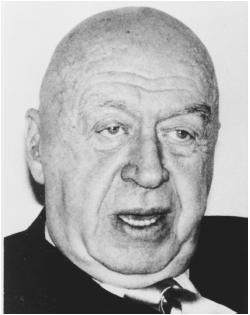
In 1940s and 1950s, apparently the major prerequisite for being a great film director was to be a fat, white, bald guy. Almost everyone today is familiar with Alfred Hitchcock and his portfolio of horror and suspense films which spans multiple decades, but most people are far less familiar with the other great balding white guy- Otto Preminger. Preminger's career also developed over multiple decades; his films were intelligent and unafraid to tackle complex topics where the protaganist and antagonist did not necessarily fall into easy "good" and "bad" categories.


Two of Preminger's best early works are highlighted below:


Every great film noir has three basic elements: rain, hard liquor and chain-smoking. Laura has its share of all three as well as an extremely detailed and often-times inconceivable plot which is scattered with moments of campiness. The film has some great one-liners, such as Clifton Webb's character, Waldo Lydecker, saying "I hate pens" and Detective McPherson telling the maid: "Well spit if it makes you feel better". Despite Preminger's reputation for being obstinant and rumors of tension between the actors on-set, there is a sense of joy with which Preminger's casts take on their roles. Many of his actors and actresses received their highest critical acclaim while under his direction.


The direction and cinematography are just simply unrivaled by today's films. Laura starts and ends with the idealized painting of Laura played by Gene Tierney and serves as the primary symbol of the idealized love that the three main characters in the film have for Laura. The painting probably plays a more important role than the character herself.


Sadly, there were some mirror images of the characters and their real lives behind the screen. As an example, at the end of the film Laura explains to the detective how she was guilty for the murder indirectly. In real life, Tierney had a child who was retarded, blind and deaf. She later found out it was because she had been exposed to German measles by a fan who came to see her at one of her appearances. Tierney was reportedly crushed that her fame contributed to the sickness of her daughter.


Where the Sidewalk Ends re-unites Preminger with his leads (Dana Andrews and Gene Tierney) from Laura, made six years earlier. Preminger appears to have enjoyed transforming Andrews hero character, Detective McPherson in Laura, into the Mark Dixon character from Sidewalk; Dixon wants to do the right thing but his tragic flaw is his desire to pursue justice at all costs, with an "ends justify the means" attitude. Watch the cool opening credits of Sidewalk in this link, but don't watch the entire link if you don't wank spoilers).


Preminger takes what could have been a cookie-cutter cop noir format and adds depth to the film by rounding out details of the characters and blurring the traditional lines between "right and wrong" and "good and bad". While Sidewalk is not nearly as intellectually engaging as his masterpiece Advise and Consent, Anatomy of a Murder and even Exodus, its still a heavy-weight in the crime noir genre and one which should be enjoyable to a large audience even today.

Saturday, August 2, 2008

Terrence Malick, The Thin Red Line (1998); New World (2005)


Have you seen Days of Heaven yet? In comparison with Terrence Malick who waited for 20 years after Days to make The Thin Red Line, my delay of slightly over a month between blog posts pales by comparison. In order to make reparations for my delay, I give you a two for one today: a review of Malick's latest two films.


Both The Thin Red Line and The New World are a continuation of Malick's dialogue about humankind's place in the natural world. If you could go camping with any director, it would have to be Malick. He simply sees things in nature that your average person does not; while all his films discuss human-centric stories, the subtext always tackles the greater world surrounding the human characters.


Both Thin Red Line and New World begin with visual scenes of nature including thick, lush forests and other-worldly underwater environs. This idyllic natural world in both films is interrupted by the "human world" which has been tainted by war or famine or disease. In Thin Red Line, this transition is illustrated with the emergence of World War II ships rumbling over the horizon. In New World, man's harmonious convergence with nature ends with the appearance of the English settlers' boats in Jamestown.

Both these arthouse films have long run times (over 2 hours) which bombard you with ideas frequently conveyed through a haunting, poetic voiceover spoken by the main character. James Caviezel's soft-spoken philosophic voice-over in Thin Red Line was pitch perfect.

In the end, neither film achieved great financial success, probably because someone searching for a traditional war movie or a Cowboys-and-Indians movie would probably go elsewhere, and with good reason. Thin Red Line was released in the same year as Saving Private Ryan, and as such was overhadowed by the hype surrounding that film and its more conventional storytelling. In the case of New World, casting Colin Farrell in a serious role, or really in any role that's not about his hair is perhaps asking a bit too much.

In any case, the good news is that Malick will not wait another decade for his new film; Tree of Life is in post-production and due out next year. Let's hope that Brad Pitt, who stars in the lead role and who is not inexperienced when it comes to hair movies, takes the high road and elevates his acting to meet Malick's genius.